
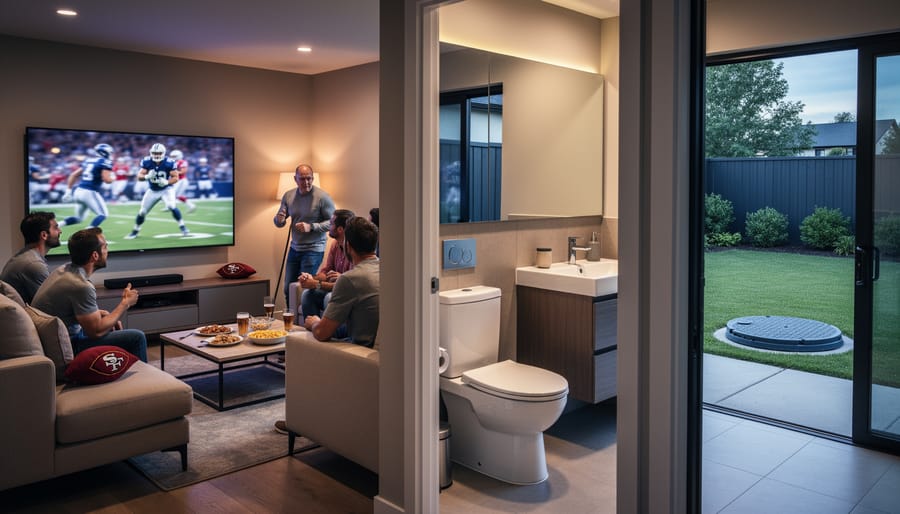
Your Sports Betting Room Could Be Destroying Your Septic System

Schedule dedicated septic inspections before converting any room into an entertainment space, as sports betting rooms with multiple guests watching games simultaneously place unusual demands on your home’s wastewater system. Whether you’re setting up a casual vai de bet login station or a full viewing lounge, understanding how concentrated bathroom usage affects your septic tank will save you from embarrassing game-day disasters and costly emergency repairs.
Install low-flow fixtures in bathrooms adjacent to your sports betting room immediately, reducing water volume by 20-60% without sacrificing functionality. These simple swaps—particularly dual-flush toilets and aerated faucets—prevent the sudden surges that overwhelm septic systems when a dozen friends simultaneously use facilities during halftime.
Map your drain field location before placing heavy furniture, televisions, or seating platforms in entertainment spaces, since compacted soil above septic components restricts oxygen flow necessary for waste breakdown. Many homeowners unknowingly damage their systems by staging outdoor viewing areas or installing temporary structures directly over absorption areas during major sporting events.
Create a maintenance calendar tied to your betting room’s busiest seasons, scheduling pumping services 2-3 months before championship tournaments or playoff periods when guest traffic peaks. This proactive approach—combined with enzyme treatments started two weeks before high-usage events—keeps bacterial colonies robust enough to handle the increased load without backup issues.
Educate guests about septic-safe practices through discrete bathroom signage, since non-flushable items like paper towels and personal wipes account for 75% of entertainment-related septic failures during gatherings.
Why Your Sports Betting Setup Puts Extra Stress on Your Septic Tank

The Game Day Factor: When Everyone Needs the Bathroom at Once
Picture this: it’s halftime during the big game, and suddenly everyone in your sports betting room makes a beeline for the bathroom. This phenomenon, known among septic professionals as “synchronized usage,” creates a dramatically different stress pattern than your typical household routine. Instead of bathroom usage spreading throughout the day, you’re dealing with concentrated bursts that can overwhelm your septic system in minutes.
Think of your septic system like a highway designed for steady traffic flow. Normal household use resembles cars trickling onto the road throughout the day. But game day creates a traffic jam, with multiple toilets flushing, sinks running, and facilities getting heavy use all within a ten-minute window. This sudden surge pushes large volumes of water and waste into your tank simultaneously, potentially stirring up solids that should remain settled and forcing partially treated water into your drainfield before it’s ready.
The challenge intensifies when you host multiple events close together, like playoff weekends or tournament brackets. Your system needs recovery time between these peak demand periods to properly separate solids from liquids and allow beneficial bacteria to break down waste effectively.
Wet Bars and Extra Fixtures: Multiplying Your Septic Load
Adding a wet bar to your sports betting room sounds like a dream upgrade, but it’s important to understand how each new fixture affects your septic system. Every sink, ice maker, mini dishwasher, or additional toilet you install increases the daily water volume your septic tank must process.
Here’s what happens: A standard wet bar sink adds roughly 10-15 gallons per day. An ice maker contributes another 2-5 gallons. If you’re installing a small dishwasher for quick glass cleanups, that’s an additional 4-6 gallons per cycle. A second bathroom with toilet and sink can add 50-100 gallons on busy game days. These numbers multiply quickly during peak betting events when guests gather.
Before adding fixtures, calculate your current septic capacity. Most systems are sized for a specific number of bedrooms and occupants. Adding multiple water-using appliances in one space can push you beyond that design limit. Consider having your tank inspected and possibly enlarged if you’re planning significant additions. You might also explore water-efficient fixtures like low-flow faucets and compact ice makers that produce ice on demand rather than storing large quantities. Spacing out installations gives your system time to adjust and helps you monitor any emerging issues before they become serious problems.
Location Matters: Septic Considerations Before Building Your Betting Room
Know Where Your Septic Components Are (Before You Dig)
Before you break ground on your sports betting room addition or renovation, you absolutely need to know the exact location of your septic system components. This step can save you from costly damage and potential environmental hazards.
Start by checking your property records. When your septic system was installed, the installer should have filed an “as-built” diagram with your local health department or building permit office. This document shows the precise placement of your tank, drain field, and distribution lines. Call your county health department and request a copy—most will provide this for free or a small fee.
If records aren’t available, look for visual clues on your property. The drain field typically appears as a rectangular area where grass grows slightly greener or lusher than surrounding areas, especially during dry spells. You might also notice slightly depressed or raised ground where the tank sits. In older properties, homeowners sometimes planted specific shrubs or markers to identify these spots.
Consider hiring a septic professional to perform a locate service. They use specialized tools like probes and electronic locators to map your system accurately. This small investment, typically between $150-$300, prevents accidentally driving construction equipment over your drain field or digging through distribution pipes.
Mark identified locations with stakes or flags before any excavation begins. Remember, even minor damage to these components can lead to system failure, contaminating your property and creating expensive repair bills that far exceed the cost of proper planning.

When to Upgrade Your Tank Size
Before adding a sports betting room, you’ll want to determine if your septic system can handle the extra demand. Think of it this way: septic systems are sized based on bedroom count because that indicates how many people typically use the home. Each bedroom adds roughly 150 gallons of daily wastewater capacity.
For your sports betting room, calculate the additional load by considering how many extra guests you’ll regularly host. If you’re planning watch parties with 8-10 friends several times weekly, that’s equivalent to adding 1-2 bedrooms worth of usage. A single toilet flush uses about 1.6 gallons, while washing hands adds another gallon. Multiply this by your guest count and frequency.
Here’s a simple test: if your current system already shows signs of strain during normal use—slow drains, gurgling sounds, or soggy lawn areas—it’s time to upgrade your tank size. Most standard residential tanks hold 1,000 gallons, suitable for a 3-4 bedroom home. Adding regular entertainment use might push you into needing a 1,250-1,500 gallon system.
A septic professional can perform a percolation test and capacity assessment to give you definitive answers tailored to your property’s soil conditions and usage patterns.
The Three Biggest Septic Killers in Sports Betting Rooms
Food Waste from Game Day Spreads
Game day spreads are a highlight of any sports betting room gathering, but those leftover chicken wings, nacho cheese, and greasy snacks pose serious risks to your septic system. Here’s the challenge: when food waste goes down your garbage disposal or gets scraped into the sink, fats, oils, and grease (FOG) can solidify in your pipes and drain field, creating stubborn clogs that interrupt the natural bacterial process your septic system relies on.
The good news? You have better options that protect your investment while keeping your game day traditions intact. Start by placing clearly marked trash bins in your betting room and adjacent kitchen areas specifically for food waste. Skip the garbage disposal entirely during big events—it’s tempting for quick cleanup, but it sends problematic solids directly into your septic tank.
Consider starting a simple composting system for appropriate food scraps like vegetable trimmings and paper napkins. This environmentally friendly approach reduces waste while keeping damaging materials out of your septic system. For greasy items like wings and pizza crusts, double-bag them in your regular trash. A little extra effort during cleanup prevents costly septic repairs down the road and keeps your system functioning smoothly for the next big game.

Cleaning Products That Destroy Beneficial Bacteria
When hosting friends for game day in your sports betting room, you’ll naturally want to keep things clean between visits. However, many common cleaning products can seriously damage your septic system’s bacterial balance. Antibacterial cleaners, bleach-based products, and chemical disinfectants kill both harmful germs and the beneficial bacteria your septic tank needs to break down waste effectively.
Products to avoid include antibacterial wipes, toilet bowl cleaners with bleach, ammonia-based glass cleaners, and drain openers. These harsh chemicals flow directly into your system with every flush or drain.
Instead, choose septic-safe alternatives like vinegar and water solutions for surfaces, baking soda for scrubbing, and enzymatic cleaners specifically labeled as septic-friendly. These options clean effectively while preserving the microscopic workforce keeping your system healthy. For restrooms used by betting room guests, stock eco-friendly hand soaps and consider enzyme-based toilet cleaners that actually support your septic system rather than destroying it.
What Never Goes Down Your Betting Room Drains
Your sports betting room may see more action than your typical bathroom, but that doesn’t mean everything should head down the drain. When guests gather for the big game, certain items commonly found in entertainment spaces can seriously damage your septic system.
Never flush or wash down paper towels, even if they seem similar to toilet paper. They don’t break down in your septic tank and can create stubborn clogs. Similarly, any type of wet wipes—even those labeled “flushable”—remain intact and accumulate in your system.
Keep food packaging materials away from drains, including chip bags, candy wrappers, and plastic bottle caps. These create blockages that can lead to expensive repairs. Grease from pizza boxes or chicken wings should never go down the sink either, as it solidifies and traps other materials.
Cigarette butts, though small, contain filters that won’t decompose. Also avoid dental floss, hair, and those tiny plastic picks from appetizer platters. Place clearly labeled trash cans throughout your betting room to make proper disposal easy for everyone. Your septic system will thank you, and you’ll avoid calling a plumber during the championship game.
Game Day Septic Protection: Your Pre-Event Checklist
The 48-Hour Preparation Plan
Two days before your big viewing party, start with a visual inspection of your septic system components. Walk your property to check for standing water, soggy patches, or unusual odors near the drain field—these could signal existing problems that heavy use will worsen. Locate your septic tank access lid and note its condition. If you haven’t had a professional inspection in the past three years, consider scheduling one, especially before hosting large groups regularly.
Next, implement water conservation measures immediately. Start spreading out household water use throughout these 48 hours rather than clustering activities. Run dishwashers and washing machines during off-peak times, and encourage family members to take shorter showers. This pre-event water discipline helps maintain optimal levels in your tank before guests arrive.
Set up designated waste disposal stations in your sports betting room and adjacent spaces. Place clearly labeled trash cans for food waste, and if you’re providing food service, consider using compostable plates to minimize what enters your plumbing. Position reminder signs in bathrooms about what shouldn’t be flushed. Create a simple checklist: verify all toilets flush properly, check for slow drains, and ensure guests know where facilities are located to prevent overcrowding in one area.
Setting Up Your Space for Septic Success
Creating a septic-friendly sports betting room doesn’t mean compromising on hospitality. Start by placing friendly reminder signs near bathrooms that say something like “Our septic system thanks you for flushing only toilet paper!” This keeps things light while educating guests.
Set up a dedicated trash bin in each bathroom, clearly labeled for items that shouldn’t be flushed. Consider adding a small basket with essentials like hand towels and tissues to reduce paper waste. In your entertainment area, position a separate bin for food waste and disposables to prevent guests from flushing trash during the excitement of game time.
Before your first gathering, casually mention your home’s septic system when giving friends the house tour. Most people appreciate the heads-up and will be more mindful. You might say, “We’re on septic, so just a friendly reminder to keep bathroom breaks simple.”
Consider creating a small laminated card with septic-safe guidelines to display discreetly near the toilet. Keep the tone welcoming rather than restrictive. These simple preparations protect your system while maintaining a comfortable atmosphere where everyone can focus on enjoying the game together. Your septic system will handle the increased activity smoothly when guests understand these basics.
Maintenance Schedule for High-Use Entertainment Spaces
When to Pump More Frequently
The standard septic pumping intervals of 3-5 years assume typical household usage, but your sports betting room changes that equation significantly. When you’re regularly hosting groups for games and events, you’re essentially running a mini commercial operation from your home, which means more frequent pumping is necessary.
Think about the math: if you host even just two viewing parties per month with 8-10 guests, you’re adding the equivalent of several household members’ worth of water usage to your system. Those extra toilet flushes, sink uses, and increased kitchen activity all contribute to faster tank filling.
As a practical guideline, consider pumping every 2-3 years if you host weekly gatherings, or annually if you’re running near-daily operations. Track your water usage through your utility bills to establish a baseline. A sustained increase of 25-50% above normal usage typically warrants cutting your pumping schedule in half. Keep records of your hosting frequency and any signs of slow drains or backups, as these help your septic professional recommend the ideal schedule for your unique situation.
Warning Signs Your System Is Struggling
Your septic system will tell you when it’s struggling—you just need to know what to listen for. Watch for slow-draining sinks, showers, or toilets, especially after hosting game-day gatherings. These are classic warning signs that your system can’t keep pace with increased water usage. Gurgling sounds from drains or toilets indicate air pockets caused by backup issues. If you notice unusually green or spongy grass above your drain field, that’s your system signaling overflow. Unpleasant odors near the tank or in your sports betting room point to ventilation problems or tank capacity concerns. Catching these early indicators allows you to schedule preventive maintenance rather than facing expensive emergency repairs during championship season when you need your system functioning perfectly.
Smart Upgrades That Protect Your Investment
Water-Efficient Fixtures That Make a Real Difference
Upgrading to water-efficient fixtures is one of the smartest investments you can make for a sports betting room that hosts frequent gatherings. Low-flow toilets reduce water usage by up to 60% compared to older models, cutting your septic system’s workload significantly during high-traffic events. Modern versions use 1.28 gallons per flush versus the 3.5-7 gallons older toilets consume, meaning your drain field processes substantially less wastewater during game-day rushes.
Efficient faucets with aerators maintain strong water pressure while using 30% less water—guests won’t notice the difference, but your septic system certainly will. For a typical sports betting room with a bathroom and wet bar, these upgrades cost between $400-$1,200 installed but can extend your septic system’s lifespan by years and reduce pumping frequency.
Consider tankless water heaters for bathroom additions, which eliminate standby water loss and provide endless hot water for multiple guests. Dual-flush toilets offer another practical option, giving users control over water usage based on need. These fixtures aren’t just environmentally responsible—they’re financially smart choices that protect your septic investment while ensuring your entertainment space functions flawlessly, even during the busiest sporting events when every bathroom trip counts.
Grease Traps and Interceptors for Wet Bars
If your sports betting room includes a wet bar with even minimal food prep—think nachos, wings, or simply rinsing greasy plates—you’ll want to protect your septic system from fats, oils, and grease (FOG). These substances solidify in pipes and septic tanks, creating clogs and reducing bacterial efficiency.
A simple grease trap or interceptor acts as your first line of defense. These devices capture FOG before it enters your septic system, allowing wastewater to flow freely while trapping the troublesome stuff in a separate chamber.
For DIY installation, consider a compact under-sink grease trap rated for residential use. Position it between your sink drain and the main waste line, ensuring it’s accessible for regular cleaning—plan on emptying it monthly during heavy use periods. Most units simply bolt into place with basic plumbing fittings.
Installation typically requires PVC pipe, Teflon tape, and adjustable wrenches. Cut into your existing drain line, attach the inlet and outlet pipes to the trap, and seal all connections properly. Always check local codes before beginning, as some jurisdictions have specific requirements.
Between cleanings, scrape plates thoroughly before rinsing and avoid pouring cooking oils down the drain. This simple habit, combined with your grease trap, keeps your septic system functioning smoothly throughout game season and beyond.
Creating a dedicated sports betting room doesn’t mean compromising your septic system’s health. With the insights and strategies we’ve covered, you can confidently host game-day gatherings while protecting one of your home’s most valuable investments. The key lies in understanding that your septic system is a living, working ecosystem that needs consistent care, especially when entertaining becomes a regular part of your home life.
Remember that the planning you do today pays dividends for years to come. Whether you’re installing water-efficient fixtures, educating your guests about what shouldn’t go down the drain, or scheduling strategic pump-outs before big events, each action contributes to your system’s longevity. These aren’t burdensome tasks but rather smart investments in sustainable home entertainment that preserves both your property value and the environment.
Your sports betting room should be a source of enjoyment, not anxiety about what’s happening beneath your lawn. By incorporating the pre-event checklists, maintenance routines, and mindful hosting practices outlined here, you’re creating a space that serves you well without overtaxing your septic infrastructure. Think of septic care as part of being a responsible homeowner who values both entertaining friends and maintaining a functional, eco-friendly household. With proper attention and preventive measures, your system will handle the excitement above ground while quietly doing its essential work below.


